
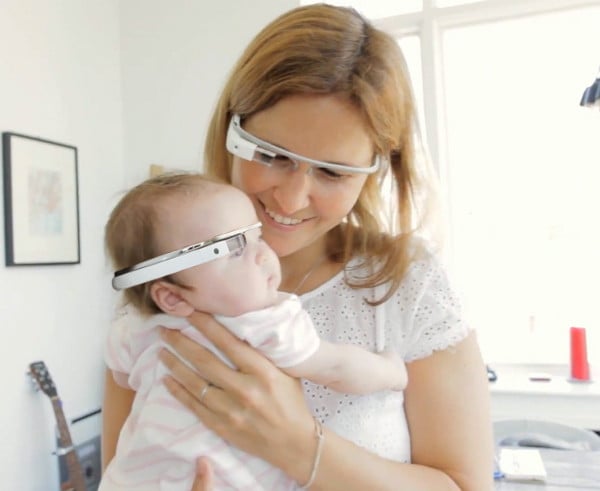
In the most general sense, online marketing is the promotion of products or services on the Internet. However, nowadays the Internet is quite hard to define. A few years ago, it was still just a big network of computers and servers, connected via cables and satellites. However, nowadays it has grown out to our phones and hybrid devices such as tablets, and is in the process of taking over wearable devices (most prominent example being Google Glass, as well as watches, wristbands, etc.), our cars (Google Car has already driven more than 50 000 km across the states by itself, without human presence). It is evolving towards the Internet of Things, where all devices in our lives will be connected and interactin with each other: the fridge, the microwave, the lights in the house, etc.
This being said, one can imagine what a vast field online marketing is already. It can be divided into many categories. Here are the most important types:
- Search Engine Marketing (SEM) and Search Engine Optimization (SEO)
- Social Media Marketing
- Mobile Marketing
- Email Marketing
- Content Marketing
- Refferal Marketing
- Affiliate Marketing
- Viral Marketing
However, just because such reach out is possible, it doesn't mean that it is easily achieved. One step that needs to be taken in order for an online marketing campaign to succeed is conducting good SEO and SEM.
Search Engine Optimization and Marketing are an essential part of online marketing. Simply put, the goal of SEO and SEM is to get hits on a webpage through search engines. At first, it might seem like a great effort for something insignificant. However, search engines (especially Google) are alreay an inseparable part of our lives; billions of people use them daily. Ranking high in Google, for instance, guarantees enormous exposure.
SEO uses a number of techniques and tools in order to push the webpage up in the search results of different engines. Each engine has a specific algorithm, which considers different factors when ranking search results. Such factors are the number of links pointing to the website, its content, date of publication, etc. A popular SEO practice is linkbuilding: creating a lot of links to the website in different locations. For instance, this can be done by including the link in comments on forums or blogs. Another important factor, maybe the most important, are keywords. SEO experts pick the best keywords for a website and aim to rank as high as possible for them. To achieve this, keyword-rich content needs to be created. This can be done by placing the keywords in the alternative text of images, or by including them (in an intelligent way) in the textual content of the website.

SEM, on the other hand, is rather mathemathical. It consists of placing ads within the serach results of an engine. The costs of each ad are calculated based on views and clicks. Marketing experts can calculate how many views they will need to get one click-through, and how many click-throughs will be needed to convert the user into a client. Then, it is just a matter of calculating costs and ROI. The advantage of SEM is that it's ultra targeted, as search engines display the ads only to users that have been looking for related information.
Another inseparable part of online marketing is social media marketing. Just like search engines, social media has grown into an inseparable part of millions of people's lives. Presence on Facebook has great advantages. Facebook ads are even more targeted than Google Adwords, since Facebook keeps a record of user's likes, interests, location, and everything he shares. They are also very organic, since an ad can easily be integrated into the newsfeed and appear as if the user already liked this. Or, it can show up as a part of their friends'activity - if a friend liked the product, this activity can be highlighted, so it draws the user's attention without giving the impression of an advertisement. Once the user has liked the page, regular posts and activity can constantly remind them of the product. Other social networks worth mentioning are Twitter, Tumblr and Pitnerest, among others. Youtube, although harder to define, also fits in the social network graph.

Another form of online marketing is email marketing. As the name suggests, it consists of sending emails to a database of users or cold lists. The advantage of this type of marketing is that everything can be calculated. ROI is easy to track and can be quite high. Open rates, click-through rates and conversion rates all boil down to some number-crunching. Moreover, email marketing is quite cheap and easy to carry out.
Content marketing is a rather general and subjective concept. It relies on content, for instance blog posts, news articles, photos, videos, infographics, etc. Blogs are a great platform for content marketing. A brand may advertise using PR articles on other blogs, or run its own blog. Running your own blog requires much more time and efforts; however, it can build strong loyalty in clients. Infographics are very trendy and draw lots of attention. White papers, how-to's, case studies and other informative documents can also include commercial content.
Other effective kind of online marketing is refferal marketing. This method consists of getting as much word-of-mouth referrals as possible. This is usually done by rewarding users for refferals. Dropbox is a great example of this. Next to their refferal program (which gave more clouds space to users that signed through a refferal link, and to the referrer), they also ran the Space Race, where they gave cloud space to university students based on the number of sign-ups from the particular university. This motivated students to get their colleagues to sign up. As of April 2010, Dropbox were getting 35% of their daily sign-ups via referrals (Wikipedia).
Mobile marketing is a new practice that is growing rapidly, in tune with the growing use of mobile devices. This kind of marketing still hasn't developed specific rules, techniques and practices. Several factors distinguish it from web marketing. First of all, location is much more important. Second, interaction is much more intuitive and faster; the ad will have the user's attention for a very short time and has to be quite compact and attention grabbing.
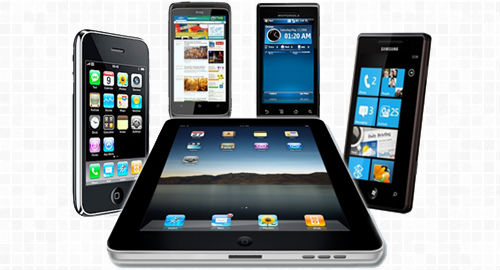
In all cases, an app can do wonders for a product or a brand. Creating a usefull, engaging app that fits the niche of the product gets users involved and guarantees that the product stays in the front of their minds. For instance, Nike has an app that tracks running. It's used daily by thousands of users that have running incorporated into their routine. Besides such functionality, an app can also use location-based marketing to suggest product stores and promotions near the user. Push notifications are also an advantage.
Companies doing affiliate marketing place advertisements and campaigns with other publishers, and the publishers get paid only when they generate traffic. The best example of this was Amazon's affiliate program.
Finally, viral marketing relies on creating attention-grabbing content that gets rapidly shared and promoted by users themelves.
Due to its rapid growth and vast audience, online marketing offers unlimited possiblities. It's effectiveness is beggining to overshadow traditional marketiing and advertising, and might as well outgrow it completely in the coming years. Every brand and company need to recognize the importance of internet marketing in order to succeed.
No comments:
Post a Comment